25 October 2013

The Squirrels and the Rats of AI

Hazelnuts reDone
Image ©Mark Tomlinson
Concerned about viruses, porn, and spam choking up the internet? Just wait until the AI rats get to work.

As bioethicist James Hughes has pointed out, we should not assume that malign forms of artificial intelligence that may emerge would be of the UFAI (unfriendly artificial intelligence) variety. ‘Unfriendliness’ implies ill will, which in turn implies human-level or greater intelligence. In contrast, AI rats would be neither friendly nor unfriendly, but they could do a great deal of damage with their relentless digital scavenging.

Don’t such rats already plague us? Aren’t viruses gnawing at and infecting our IT systems now? Yes, but computer viruses are not intelligent. Rat-level AI is still some way off. The problem-solving capabilities of even the tiniest of rodents are a source of both inspiration and frustration to neuroscientists and AI researchers; rats have drives, and like us, they employ sophisticated behaviours to satisfy those drives. In contrast, computer viruses are mere algorithms lacking any form of desire or intent.

How would AI rats emerge? ‘Weak AI’ systems already abound: air-traffic control systems, vehicle engine-management systems, big-data language translation systems, ‘expert systems’, and so on. It is possible that weak AIs augmented to perform ever-more specialised roles could be elevated, accidentally (or maliciously), to a semi-sentient or sentient – but not sapient – level. Without sapient cognition, these entities would have no reasons or ability to attempt to communicate with us. Initially, they would perform the roles for which they were originally designed; multiplying geometrically, however, they might soon run out of target tasks and become ‘hungry’ for more. An engine-management system in frenzied competition with itself and with other such systems may not make for a pleasant driving experience. Rat infestation in an air-traffic control system could spell disaster.

Fortunately, others have different ideas about AI rodent scenarios. The roboticist and AI-developer Steve Grand opts for the rather cuter analogy of squirrels. In his book Creation: Life and How to Make It, he suggests that even squirrel-level intelligence could be extremely useful to us:
But imagine putting squirrel brains into, let us say, a set of traffic lights. …If the mind of a rodent was placed into each signal, and the signals were rewarded for how well they managed to smooth the flow of traffic in their local area, then it seems plausible that it could work.
Note that reward is vital to this kind of scenario. These ‘squirrels’ would have to be intelligent enough to be able to seek reward, and they would have to be able to learn that they would find that reward in the harmonious and efficient performance of their appointed tasks. It may be hard for us to imagine smooth traffic flow as the ‘nuts’ of such a setup, but just try to think about how a sapient or transapient strong AI might view our motivations.

I find implausible the idea of a Singularity where we suddenly leap from where we are now directly to strong AI. More likely, and I agree with Hughes on this, is one where intermediate-level AIs begin to spring up and multiply as scientists press on towards ever-stronger artificial intelligence. Refining our AI ethics to cover the kinds of capabilities with which we might accidentally or purposely endow weak AIs may allow us to benefit from harmonious (and quite cuddly) traffic systems while avoiding the need for drastic pest control.

26 September 2013

Scotland: An Abstracted State of Potential Grace

Merida
A wide-eyed Merida.
Image ©Alice the Photo Ninja
I used to be political; now I’m just politic.

Following on from my recent article Neuro with Everything, where I raised the vexatious issue of so-called neuropolitics, I will now take a deeper refractory look at our psychological blocks against things constitutional. Why are we uncomfortable about the mechanics of nationhood? Because we don’t really know what ‘nations’ are. Why is this relevant? Because, in Scotland, we are in a process of building a new one. Now, pass me that torque wrench.

Nations (yawn), how un-futuristic. Not so fast, there. While futurists tend to look forward to a time when all humankind will live in harmony, perhaps even under the auspices of a benevolent form of world government, some of us ponder what is the most expedient way to get there. Nations can be desperately un-futuristic, especially when they are cobbled together from the zombie vestiges of dead empires. Alternatively, they can be dynamic, paradigm-shifting agents in this world of exploding complexity.

Nations don’t exist. Countries don’t exist. Landmasses do exist, at least in the ordinary physical sense. People exist, living on landmasses. No, that’s not right. Roving biomasses exist on landmasses. Better. Some of these roving biological entities (us) are self-aware. These self-aware entities tend to group together with others whom they feel are like them – they are social entities. This can cause problems. These entities tend to argue with, fight with, and sometimes kill others whom they feel are dissimilar to them. Nations form. ‘In-groups’ delineate their territories using convenient geological boundaries, and then call these nation/territory constructs ‘countries’.

The term statist is often used as an insult, these days, against people who think that nation states can be effective vehicles for delivering on the needs and aspirations of individuals. You might expect such an attitude from capitalists (even the modern anarcho-capitalist variety) and ‘libertarians’, but why do many technoprogressive leftists also take this stance? I think it is because they assume that all nations, both existing and emerging, have been and will be built using the same failed templates that past nations used.

People are ‘agents’ within nations; neurons can be thought of as ‘agents’ within persons. Yet, perhaps because nations are seen as ‘not natural’ and ‘manufactured’ whereas persons are seen as wholly natural, we tend to dismiss the fact that they are both types of abstraction.[i] There are many ways in which neurons in their communicative context of human brains are different from humans in their communicative context of nations; I am not claiming that they produce the same types of abstraction, only that both can be seen as abstraction-generating agents of sorts.

Nations may behave unpredictably, but they each seem to have a unique ‘character’. They can be calm or aggressive, colourful or dour, outgoing or reclusive. They may form intimate relationships with other nations. Sometimes those relationships become strained, or abusively one-sided.

Scotland has a ‘character’. It is often identified as female. Some persons tend to think of her as traditional, wise, and cautious, but others see the growing scintilla in her eye. She craves.

We represent ourselves in myriad different ways. We change ourselves. We think. We act. Those of us who spend time pondering the future of the human race should not pretend that we can leap from here to utopia in a single bound. The Singularity might happen, but, then again, it might not. We need to interrogate our world, and engage with it. We cannot sit around waiting for some kind of ‘hard takeoff’.[ii]

The elevation of morality is important to me. I want to live in a morally-elevated world. On this trajectory, I choose the expedient of personal agency; I also find that I must choose the expedient of the fair, diverse, creative, forward-looking, independent nation state that I think we have an opportunity to create here. This may be unfashionable in futurist circles, but what should a futurist care for fashion?

Empires – and bloated nations that act like empires – shrink persons. They reduce us to mere ‘subjects’ with little more agency than synaptically-weak neurons in a conflicted brain. But consensual nations, chosen freely and fairly, can connect us together in fascinatingly teleodynamic ways. They can bring us together and help us to reach out. They can give us a clear voice in the growing din. Under the right circumstances, they can grant us citizenship within a well-adjusted, constantly-questioning, fully-functioning, enlightened ‘national consciousness’.


[i]     D. Parfit. Reasons and Persons. Oxford: Oxford University Press, 1984.
[ii]    Inspired by a talk, in 2013, by James Hughes Ph.D., of the Institute for Ethics and Emerging Technologies

20 September 2013

Quantum Consciousness: The Ultimate Gap-filler

wanderer between the worlds
Image ©Cornelia Kopp
When Daniel Dennett coined the term ‘greedy reductionism’, in his book Darwin’s Dangerous Idea (1995), he may not have fully realised just how byzantinely gluttonous some ‘high tech’ forms of such reductionism could become.

Dennett was taking aim at the false type of reductionism; the kind that ‘gobbles up’ entire layers of complexity warranting scientific investigation in its haste to get to some imagined seed of perfect truth. I think he primarily had religion in mind, because of its obvious zeal to dig for gods at the slightest opportunity, and to brand everything unexplained as proofs of ‘intelligent design’. There is another kind of greedy reductionism, however, that is more of a closet bulimic than an out-and-out hog.

In my sights right now is the so-called orchestrated objective reduction (Orch-OR) hypothesis devised by mathematical physicist, Roger Penrose, and anaesthesiologist Stuart Hameroff. Here, the gods of consciousness are squeezed into such tiny gaps that the gaps aren’t really gaps at all, but quantum states.

Orch-OR holds that human consciousness depends on exotic quantum-mechanical phenomena such as Bose-Einstein condensates. When, in his book The Emperor’s New Mind (1989), Penrose posited the idea of consciousness as a quantum phenomenon, he lacked an explanatory framework for it. Penrose utilised the counter-intuitive mathematics of Kurt Gödel’s incompleteness theorem in claiming that thought must be non-computable, but he did not propose any substantive alternative to classical-physics theories of the ways that neurons and synapses work.

What is unusual about Orch-OR, compared with the various other ‘quantum soul’ notions, is that it has an ostensibly scientific basis; quantum superpositions, Bose-Einstein condensates, macroscopic quantum effects, quantum entanglement, and so on are all real phenomena. It seems, then, reasonable to look at an apparently very strange and inexplicable outcome of a biological substrate – consciousness – and explain it wholly in terms of quantum strangeness. So why are other scientists so keen to attack this hypothesis?

There is another ‘why?’ that we should first ask ourselves: why ignore all the other possible explanations that have still to be fully explored, and go straight for the quantum one? Investigation of nanoscale components of neurites in the brain, such as microtubules and neurofilaments, requires an electron microscope. The potential information-bearing capacity of these ‘components’ is unimaginably huge. And it is highly likely that they are capable of performing their role without the influence of quantum effects. Granted, as holistic reductionists we should not assume that, say, microtubules are bearers of discrete pieces of information, such as memories. But we should be prepared to accept that they contribute to the substrate of the brain, allowing – in highly-convolved combination with all the other levels of material processes – a kind of computation to happen in the system as a whole.

Now we’re getting down to it: computability versus non-computability. If we are going to insist that computation is ‘made’ of numbers, then we open ourselves up to attack by non-reductionists (and by so-called greedy reductionists). But, the way I like to think of it, computation isn’t made of numbers any more than money is made of paper. Computation can be represented in numerical form, and money can be represented in paper form; that doesn’t mean that those representations are what those things are.

Physicists such as Max Tegmark have rebutted Orch-OR, citing experiments indicating that the quantum states claimed for it by Hameroff would not arise and/or would not last long enough to play a role in consciousness. We should also bear in mind that Hameroff believes in ghosts. In an interview for the website of the Institute of Noetic Sciences, he stated: ‘I think consciousness is actually fundamental and intrinsic to the universe, that it’s built into the universe.’ This, of course, is animistic; Hameroff clearly believes in some type of ‘animating life force’ permeating the Universe. So his agenda is clear – he wants to find a way to scientise his belief in what really amounts to a ‘quantum soul’.

Our universe is quantum. It is probabilistic all the way up and all the way down. But if we allow non-reductionists masquerading as hungry reductionists to gobble up all the classical levels in between, we will have no classical matter left to interact with. We will be giving up on our place in the Universe, kicking back, shrugging our shoulders, munching on the junk food of bad science, and saying, ‘Wow, you know, it’s all like... energy, man.’ We will be making ourselves inexplicable, when there is absolutely no need to do so.

We are well used to hearing this kind of line from the religious. Now we also have to be constantly on our guard against plausible-sounding quantum hucksters (see Deepak Chopra, among others). We reductionists may cause you discomfort, by breaking you down into smaller and smaller parts. But these greedy reductionists and non-reductionists will swallow you whole as soon as look at you.

10 September 2013

Neuro with Everything

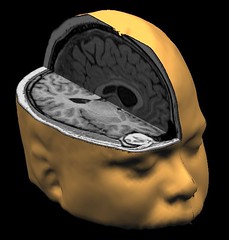
My brainIt seems like you can’t switch on your TV or open a web browser these days without bumping into brains. Neuroscientific discoveries are beginning to impact on areas of our lives that we had thought were set in sociocultural aspic, not in grey and white matter.

One that particularly interests me is so-called neuropolitics – ‘the interplay between the brain and politics.’ Using the word ‘interplay’ (as the Wikipedia definition does) is something of a cop-out, for we need to face up to the fact that politics happens inside brains, and the societies we live in are largely created by the repercussions of the actions that stem from those neural ruminations.

Tempting though it is to brand the examination of such linkages as pointless ‘neurobollocks’, we cannot continue to view the outcomes of policies as somehow removed from their sources in the biological brains of those in positions of power. Obviously, many of us are uncomfortable with the notion that we might be governed by ‘bad apples’ who, in some cases, we may have helped to rise to the top. More uncomfortable, though, is the realisation that all political ideologies are patterns of electrical signals running through the accrued pathways of their gelatinous substrates.

Does that matter? Couldn’t we say the same about all human experience? Yes, we could; the key point here is that the impact on us of the cognitive activity of our leaders in disproportionate and asymmetrical. They can think us into prosperity, poverty, or oblivion, but we, as individuals, cannot do the same to them.

I have suggested in a previous article that we should implement some form of neurological testing of political candidates, to try, as best we can, to tease out their true motivations. Saying that you are fit to run a country is an extraordinary claim – one that, in my opinion, requires extraordinary evidence.

And talking of evidence, what is all the fuss around neurolaw? As well as writing fascinating science and philosophy-of-science books such as Sum: Tales from the Afterlives and Incognito: The Secret Lives of the Brain, neuroscientist David Eagleman spends a good deal of his time writing papers and speaking on this subject. The truth of whether or not a person has committed a crime is in the brain. The idea of trying to extract that truth by means other that the traditional question-and-answer method is, however, ethically problematic to say the least.

Rather than raising the distressing prospect of courtroom psychosurgery, Eagleman tends to concentrate on the neuroscientifc facts behind our concepts of blame and punishment: If we have little choice in the ways our brains turn out, can we really be blamed and punished when our actions cross the line, stepping from socially acceptable to socially proscribed? In Incognito, he comes across as optimistic about the future: ‘The upshot will be that we can have an evidence-based legal system in which we will continue to take criminals off the streets, but we will change our reasons for punishment and our opportunities for rehabilitation.’ He also admits, however, that there are and will still be criminals for whom neither punishment nor rehabilitation will succeed.

I have certain sympathies with those who cry ‘neurobollocks!’ when writers and broadcasters attempt to dress up thinly-informed neuron-gazing as true scientific insight. For example, although I enjoyed it at the time, I now take Malcolm Gladwell’s Blink with a hefty pinch of incredulity. Now what was his hypothesis again? That we are really smart and usually right when we don’t think things through, and instead just go with our ‘instincts’? Ponder the merit of that claim next time you end up in a police cell after punching somebody in the face. It is perhaps not the kind of self-help you were looking for.

It is also fair to say that the bright lights of fMRI (functional magnetic resonance imaging) have dazzled many. Nuanced interpretations of what are, in reality, maps of blood flow in the brain don’t make for exciting news stories.

But let us not be too hard on those who try to frame every element of the human condition in cognitive terms. It can be good for us to think that way. It can be truly humbling. In the introduction to his book Connectome: How the Brain's Wiring Makes Us Who We Are, Sebastian Seung puts it this way: ‘It is all of these things. Indeed, sometimes I think it is everything.’ The wistful sentiment bundled with that otherwise-austere statement touches me. Seung is not circumscribing our potential; he is rejoicing in it, while acknowledging its intricately fragile, self-referencing roots.

The blizzard of neuro- neologisms will blow harder yet in the years to come. Some of its fall will melt away; some will chill us to the cores of our being. An open mind does not have to be a suggestible one. A healthy dose of scepticism may serve us well during the great, surging neurostorm [sic] ahead.

06 September 2013

Figure-Ground Reversal

‘Consciousness is irreducible,’ proclaimed John Searle in a recent TED talk. This was just after telling us that we need to learn to think of it as a wholly biological process.

So, let me get this straight – it’s an irreducible biological process. I like John Searle’s manner – the irritable, baggy-trousered old philosopher thing works well for him. He is best known for his Chinese room thought experiment: an argument against the possibility of true artificial intelligence (AI). He used an elaborate metaphor involving Chinese characters written on bits of paper being passed into a locked room where they are interpreted, using a set of logical rules, by a person who does not speak the language. The set of rules also enables the person in the room to respond in kind.

The argument, as you can see, is to do with ‘actual’ understanding. Searle was claiming that there would be no understanding of the language going on within the locked room; ergo, there would be no understanding going on inside even the most sophisticated AI subjected to the Turing test. I’ll admit that I’m a little biased against Searle’s argument, having seen it systematically disassembled by Daniel Dennett, in his book Consciousness Explained, but I don’t think it would be unfair to say that some of Searle’s claims about the nature of consciousness seem to be somewhat lacking in levels.

We know that the phenomenon of consciousness arises from the biological substrate of the brain. It’s a dualistic waste of time to argue otherwise. Searle is clearly frustrated by the endless philosophical debates over its real or illusory nature, and I’m with him on that, but not because I think we must unequivocally brand it as real; I’m frustrated by that debate because I think both words are wrong.

We often forget that there is a vast range of phenomena in the Universe for which we have no semantic classifications: What do you call that feeling of rocks changing shape by the process of erosion? What do you call that sense of thirsty tree root seeking water? You may argue that these examples have nothing to do with human consciousness. Nevertheless, there are all kinds of micro-processes going on inside you that you don’t ‘experience’ directly but which have some kind of teleonomic ‘direction’ to them.

Terrence Deacon’s Incomplete Nature has most recently influenced my thoughts on this. The book is hard going sometimes, but I’m excited by his formalisation of the idea of a kind of ‘figure-ground reversal’ – what may be important about phenomena like consciousness is not what is present but what is absent. It is a theory of constraints: a whirlpool is a phenomenon produced by the constraining of water molecules to follow a range of downward-spiralling trajectories; perhaps consciousness is an inevitable result of constraint of molecules into a very specific biological configuration. What is absent, in both these cases, is the near-infinite range of trajectories and configurations that those molecules might otherwise have followed or taken on.

Deacon’s ‘essential absences’ – ‘absentials’ – resonate with me. I think it is partly because they demonstrate just how inadequate our semantic modes in the consciousness debate have been. It’s also because I like the idea of being an absential rend in the fabric of the not-me Universe. For many, though, talk of essential absence induces a kind of existential trypophobia – an irrational fear of holes – rendering them confused, frightened, or even disgusted by the notion.

So what about the Chinese room? Well, you just fill it with a vast number of people who don’t understand the symbols, give them the correct rules, and set them to work. If it is correctly set up, the room will produce the correct answer. But, surely, the understanding is still missing. Exactly. There are many things missing from this setup – understanding is an essential one of them. It is a kind of phenomenon that is being generated despite its absence as a specific phenomenon. That is why it looks irreducible.

Strange? Yes, very. But cogito ergo sum! I suppose it’s a good enough shorthand for this: something is producing a phenomenon that other somethings producing this phenomenon and the something producing the phenomenon call ‘thinking’. Constraint steers that clumsy definition towards an essentially useful I.

As I am an inveterate reductionist, you might think I should be more concerned about the biological mechanisms that make this possible. Certainly, the mechanisms fascinate me. However, that does not mean that I expect to be able to tap my finger on a screen and say, ‘Look, that’s consciousness right there.’ I may be able to say, ‘Those are the structures from which the state of consciousness emerges’, but that’s not quite the same. Phenomenal states emerge, and they have many different characteristics. Try pinpointing the vorticity in a whirlpool.

Before I am dragged under, I’d better round this off. If this were a letter, I think it would be pleasing to sign it off with a warmly heartfelt...

...absentially, consciously yours,

19 August 2013

The Myths of 5-A-Day and Other Arbitrary Health Targets

Eat five ‘portions’ of fruit and veg per day, walk 10,000 steps per day, eat no more than 30 grams of saturated fat per day: health targets; I’m sure you’ve heard plenty of them. But where do they come from, and what do they actually mean?

I am not about to knock the benefits of a ‘healthy lifestyle’. A healthy lifestyle sounds great, a healthy life sounds even better. It’s just that neither I, nor you, nor anyone else can pinpoint what that means. Do you really think that the delicate homeostatic and hormetic balance of your specific biology can be properly regulated by following a motley assortment of arbitrary ‘targets’?

It seems like a sensible idea to follow such government (and health-related NGO) set maximums and minimums. Government bodies have the benefit of access to a great deal of current and historical research on the outcomes of diet and exercise regimes; we, as individuals, appear to have far less expertise, scope, and data-mining capability to wield in our battles against bulges, heart problems, diabetes, and ill-health in general. The ‘common sense’ approach, then, must surely be to pay close attention to the resulting ‘advice’ issuing forth from the likes of the US Public Health Service and the UK National Health Service. Indeed, there is nothing wrong with the principle of worldwide and national health bodies giving out such advice; it’s in the practice that the problem lies.

Let us take the NHS-issued ‘five portions of fruit and vegetables per day’ target, which is the focus of this article and the main focus for my scorn. It appears that this one was cooked up (or, better still, served raw) in California around 1988, after public health representatives and fruit and veg growers got together and decided that such a campaign would be mutually beneficial. The campaign was launched in the UK in 2003 to what was, at the time, a desperate and suggestible public; the ‘obesity epidemic’ was grabbing headlines, and according to Professor Tim Lang who had earlier advised the UK Department of Health on such issues, ‘We needed something.’

And ‘something’ was exactly what they got: the UK government got to look like it was doing something in the midst of what newspapers were branding a crisis; fruit and veg growers got a boost in sales; unfortunately, the public got only a new, shrill, guilt-inducing, and generally annoying piece of arbitrary marketing-speak.

It would be difficult (to say the least) to find out whether this campaign has brought any health benefits whatsoever to UK citizens following its advice. I would guess that it has actually made things worse. Take the advice on fruit juice, for example. The NHS tells us, in the ‘Change4Life’ section of its website, ‘If you drink juice, a 150ml glass of unsweetened 100% fruit or vegetable juice counts as one portion – but it doesn’t matter how much more you drink, it’s still one portion.’ Although the information then goes on to add that, ‘Juice can contain quite a lot of fruit sugar, so it’s best to limit the amount you drink’, even the ‘150ml’ makes no sense given that that amount of ‘unsweetened’ orange juice can contain 3-4 teaspoons of sugar. There’s less sugar in Coca Cola. I wouldn’t take 3-4 teaspoons of sugar in an entire day, never mind in one ‘portion’.

I have here in front of me a tin of Heinz baked beans that proudly proclaims in large lettering on the front of its label, ‘1 of your 5 a day’. Really? This product contains 20 grams of sugar per tin – almost all of it artificially added to the disgusting ‘rich tomato sauce’ enveloping the sorely-abused beans. The tin is marked off into four 100-gram measurements to show you just how much health benefit you are gaining with each portion of the product you eat. Nonsense.

Five-a-day is easy to shoot down because it seems too ridiculous to be true, yet the NHS and UK government have allowed it to stand for ten years. And, unbelievably, it’s still running. It is dished out to us daily, along with extra dollops of smiling wellness and spangly, colourful, childish graphics.

We have a problem here. It is one of credulity and of lag. We must be far more vigilant and far less credulous in our consumption of this kind of ‘health advice’, otherwise we end up in the kind of situation we are in – one where opportunistic food companies start using public health advice to punt their often-highly-suspect products. The ‘lag’ is to do with health advice more generally: we are discussing a relatively new and hypothetical field of study; consensus on human exercise and nutrition has not yet been reached, so a good deal of the advice given out is based upon speculation and is issued to the public before it has been properly tested (in effect, using us as experimental guinea pigs).

I will not be eating my ‘5-a-day’ today. This is not because I am thrawn (although I can be) but because the message is unscientific: it is neat, tidy, easy-to-follow hokum. I will eat some vegetables, I might even eat some fruit; I will also eat some other foods containing high percentages of protein and fat. My brain and body will receive adequate fuel. I will question, I will rail, I will think before I swallow. I might even take some steps once this cup of coffee has made it to my bladder; they will not number 10,000.

That is my front-of-the-can message. It isn’t neat, it isn’t sweet, may well be hard to stomach, and may not amount to a hill of beans. Why not ask some pertinent questions, and then design one of your own? The spangly graphics are optional.

07 July 2013

The Art of the Archivist


My friend’s approach to dealing with the accrued data of his life is different to mine: He treats his with reverence; I treat much of mine with cold pragmatism.

This makes little sense. I have experienced the trauma of losing personal-meaning-suffused data when, many years ago, a lightning strike fried my PC and, along with it, the hard-drive containing the sole copies of songs I had written. Losing such data feels a lot like grief, probably because it is grief. You can see such grief in the expressions of those who have lost all their possessions to fire or flood. The rationalist in us may shrug and say, ‘Well, nobody died’; clearly, however, something died – the part of the person that was implicit in their now-destroyed archive.

To a large extent, we take our personal data for granted. It has become easy for us to create (and back-up) vast amounts of it. For some, physical things that cannot be converted into easily-storable binary data have become a burden; for others, an MP3 file could never substitute for a cherished disc of grooved vinyl. But consider, for a moment, the burdens (both physical and metaphorical) of earlier archivists: inscribed stone tablets; purport-laden sheets of carefully-prepared Cyperus papyrus; symbol-etched tree bark, bamboo, bone; ‘illuminated’ codices on parchment of goat skin; and, of course, delicate and easily-corrupted networks of interconnected neurons (present in the brain of the skilled storyteller – in effect, an oral archivist – charged with memorising and relating the history of his/her people).

Ancient archive disasters such as the destruction (by various fires, spaced over hundreds of years) of the Library of Alexandria demonstrate the vulnerability of some of those early systems. Though less vulnerable to complete destruction, well managed modern-day digital archives are still burdensome and, regrettably, still prone to corruption.

For cryonicists like me, the understanding of self as potentially-preservable pattern demands a practical/radical approach to archival. I am my own medium, so my approach to the storage of this particular archive has been to choose a method by which the important parts of the pattern might just survive my death: the cold, radical pragmatism of cryonic suspension. The other practical strand of the required approach (which I have not yet fully addressed) is to do with the archival of the externalised parts of myself – the valued data that I have acquired, created, and sometimes stored, that constitutes my distributed avatar-halo.

An article by Mike Anzis in the April 2013 issue of Cryonics magazine goes into the issues of ‘very long-term storage of personal information and materials’ at length. It’s all delightfully practical. I already knew that the head would be going in the liquid nitrogen ‘box’, but Anzis has the other bases covered too: the physical possessions go in the Alcor storage box; the data archives go onto a Millenniata M-Disc (‘a DVD made out of stone that lasts 1,000 years’), or up to cloud storage services such as Google Drive or SkyDrive. None of this sounds much like encapsulation of an avatar-halo, until, that is, we get to ‘mind files’. LifeNaut and CyBeRev are secure, cloud-based services that allow the user to create a central hub linking together their various online presences, to upload files for secure storage, and to generate (from photos) an avatar that can relay stored information to those granted access to their profile.

My friend already has part of my mind file. Whereas I have misplaced much of the music we created together and the photos taken when we were in a band together, he has kept it all. And he knows where to find it: it is all neatly stored and clearly labelled. Because of his diligence, parts of my life have been preserved that would otherwise have been lost. I admit that I have been careless with my own past, but, paradoxically, that’s not because I don’t care about it; I think it has to do with the fact that the connections to it that remain are painfully tenuous. That’s no excuse, though. I care deeply about the preservation of life, so I should also care deeply about the preservation of the stacked or scattered elements that go together to make a whole one.

Perhaps what is missing from my attitude to archival is the art. My friend feels and knows how to enhance the significance of the objectified data in his hands. For him, a cassette tape containing old songs is more than just that; the spine and the song titles have been inscribed – in his inimitable jagged-pen style – with care, with love, and with moment. He, like other archivists through the ages, makes the object itself, not just the data, radiate significance. This ability to capture meaning and moment is an integral part of his personality. It is what makes him both artist and archivist.

Today is his molybdenum birthday. This piece of writing is my cheapskate gift to him. Happy birthday, Scott. Keep on caring. And keep on keepin’.

27 March 2013

The Sapiens and the Sea Urchin

Echinus esculentus – the species of sea urchin I sometimes find on the shore in front of my house at a very low tide – can live for up to sixteen years. Kim Suozzi, of Homo sapiens, got twenty-three. What shall we make of this?

Kim was undoubtedly more complex than a sea urchin, so the cancer that killed her had a much greater bulk of DNA from which to emerge as random mutation. Her complexity was also manifest in a quick and pragmatic mind; a mind booted up from a brain equipped for vastly greater outreach than the simple boundary definitions of our spiny Echinus.

The last dead sea urchin I saw had been killed by a seagull. A powerful, expertly-aimed peck to the top-mounted gonads, and the sea urchin’s cells were off on a new helter-skelter branch of the carbon cycle, beginning in the digestive tract of a Larus argentatus. Some of the seagull’s far-flung excrement may have lodged in a receptive crack in a rock, there to nourish new life – pretty sea-pinks, daisies, bacteria.

The Echinus cells that entered my own digestive tract the last (and only) time I ate one, fed back into the cycle far less efficiently; putrefying in the base of a septic tank for several months prior to removal to a processing plant by a big yellow tanker.

Don’t you find that the idea of dead Echinus gonad cells processed through the digestive systems of Chordata makes for a poetic illustration of the majesty of the cycle of life? No? Why not? What about the prosaic old one about the tree planted over a buried dead body. Better, yes?

If you are the sort of person that insists on trotting out such Pagan banalities then you’re going to have to learn to take the rough with the smooth.

Without such cycles there would be no life. That is true. But our response to this truth is entirely open to revision. If it is not open to revision then we are thinking in a primitive and simplistic way, ignoring the burgeoning complexity thrown up by the strange state of self-awareness birthed, in us, by the cycle of life, feeding and filth.

Despite her youth, Kim grasped the complexity. She removed her outreach/inreach organ – her brain – from the accidental tyranny of the cycle. It has been cryopreserved.

If you choose to behave like Echinus esculentus, you’ll find a myriad ways to surrender to the whims of the chain of endless, dumb, recycling. But no poetry. If you choose to really think like a sapiens you’ll take the truth of the cycle on board; then, after weighing up your slim options, you’ll do your damnedest to break free of it.

15 November 2011

Thinking with my Gut

I have been practising mindfulness. It's an attempt to get my 'noisy' thoughts under control: I seem to have a 'wordy' brain and the crosstalk can get intrusive to the point where my thoughts sometime feel like the reception of a badly-tuned radio.

Mindfulness can bring odd sensations to the surface. One that has been strengthening is the notion that I have been thinking with my gut. It feels like my gut is contributing to the neural 'interference' and that there is a corrosive 'looping' of disquiet between my gut and my brain. Conversely, a conscious effort to relax my gut during meditation seems to quieten my thoughts.

Gut neurons are much underestimated. Your gut contains a quantity of neurons approximately equivalent to that of a cat brain. It seems perversely brain-centric (and I've certainly been guilty of this) to assume that our total emotional state stems entirely from the limbic system, but it's somehow hard to imagine how our gut might contribute to our state of mind. But contribute it does, and strongly. The 'enteric nervous system', as it is known, is a network of neurons with a complex and quite independent circuitry all of its own. It is entirely capable of sending signals up to the 'head brain' as well as receiving 'afferent' (incoming) signals.

So where in the system does the disquiet start? Perhaps that's a redundant question. Who's to say that feelings of anxiety, upset or depression must always start in the brain then feed into the enteric nervous system. Maybe, at least sometimes, we start with an uncomfortable gut and that feeds into the loop a message that something is wrong or 'out of kilter', leading to general disquiet throughout the system. I am trying, for my own reasons at least, to see the problem as not starting at any specific point in the system: it doesn't really matter where it started - if it has become a loop of corrosive thinking and feeling then it needs to be calmed in order to restore balance.

I think that the mindfulness practice helps to reveal the action of these interacting systems. The partial sensory deprivation bubbles these other, more subtle, cues to the surface. But what to do if your gut feels anxious? A command and control strategy seems inappropriate: I don't want to instruct my gut to behave, I just want to regain equilibrium. There's no easy way to visualise how one might go about mediating the 'dialogue' between the brain and the gut but I am fairly confident that this is something that will come to me in time if I keep up the mindfulness practice. The smooth muscle of the gut wall does seem to respond to gentle persuasion but being able to frame that persuasion at will does not come easily to everyone.

We hear a lot about serotonin because of its involvement in feelings of well-being (or of depression where levels are too low). Antidepressants such as Prozac are part of a class of drugs known as SSRIs (Selective Serotonin Reuptake Inhibitors). But many are not aware that serotonin is predominantly a neurotransmitter of the gastrointestinal (GI) tract. You are having literal 'gut feelings' and scientists are using this fact to try to control your emotions. There is some evidence, however, that the effectiveness of these drugs declines over time as receptors become 'desensitised' and begin to revert to their former states.

We're also well used to hearing of people taking 'stomach pills' such as Losec or omeprazole. These drugs are PPIs (Proton Pump Inhibitors) and are highly effective at inhibiting acid secretion in the stomach. These are powerful drugs but we tend to take them for granted and I wonder about their potential effects on the ability of the enteric nervous system to find its own comfortable level of secretion in harmony with the brain.

I'm fortunate that I've never had to take antidepressants, or indeed PPIs. I sometimes find my mental 'noise' unsettling but it is not distressing to the point where I would consider medication. I have a pervasive feeling that a state of prolonged equilibrium should be possible if I work at it. This may just be wishful thinking but it is a type of wishful thinking that my gut seems to approve of.

04 February 2011

A Leadership of Empaths

I wrote, a while back in a post called 'Cognitive Democracy', about the idea of intensive psychological evaluation of political candidates in order to find out their true motivations, before they ever have a chance to gain power.

My proposed barrage of tests was something of a blunt instrument in that the specifics of the testing methods were a little ill-defined. My interest in the subject of empathy has now led me to think that the ability to empathise is one of the main defining characteristics of an emotionally-rounded human being. Perhaps, then, scientific evidence of this ability in a given individual should form the core of the "fitness for Office" evaluation.

The definition of what constitutes true empathy may be a human construct but the faculty to empathise is formed of real structures in the brain. It seems odd for me to have to point this out, as it seems self-evident. But empathy strikes many as a woolly concept, too mired in Freudian psychobabble and gender stereotyping to take seriously as a measure of worth. Regardless of these outdated views, progress towards a scientific understanding of the 'mechanics' of empathy has moved on apace.

I remember being fascinated and delighted to find out, a few years ago, about the existence of what became known as 'mirror neurons'. These are a class of neurons that fire both when an animal is undertaking a given action itself and when it observes that action being undertaken by another. Scientific opinion on the role of mirror neurons in empathy, is divided. But it's clear why scientists might form such a hypothesis. If we see another creature, particularly another human, experiencing physical or emotional pain it's likely that the overall strength of our resulting mirror neuron firing can be correlated with the strength of what one might call our 'empathic response'.

In summation of the above, this hypothesis suggests that if we have trouble 'mirroring' the feelings of others then we have may be unable to sustain a coherent 'theory of mind' about them and, therefore, may be unable to relate to them as thinking, feeling entities in their own right. This brings to mind Kant's 'Categorical Imperative': "The second premise is that conduct is "right" if it treats others as ends in themselves and not as means to an end (the "Second Maxim")".

But I didn't intend this to meander off into philosophy. The point is that empathy is not a philosophical construct but a physical reality. In the above example it follows that if your mirror neurons are few in number you may find yourself physically unable to empathise. Even if the mirror neuron hypothesis is not completely correct it is still the case that we now have scientific methods for measuring empathic response. Recent studies, such as this one undertaken at Columbia University, have mapped the brain regions involved using functional MRI. As Dr Michael Mosley found in his recent BBC series The Brain: A Secret History, discovering via fMRI that your empathic response is weaker than you had led yourself to believe, can be an uncomfortable experience.

It's interesting to note that, as well as regions of the parietal and premotor cortex, some regions responsible for the control of our own emotional responses, were involved. This could be interpreted as an indication that the empathic response is a highly evolved one, bearing little relation to the 'gut emotional responses' of 'old brain' areas such as the amygdala. I like to think of empathy as the ability to emoting with your new brain, rather than your old one. In fact being an 'amygdaloid' (a potential term for an amygdalocentric person) might strongly mitigate against the development of a healthy empathic response.

So we now have the tools to identify individuals with weak empathic response. What are the implications of this and how do we use the knowledge responsibly? I would argue that not using it to test those who seek great power, would be a dereliction of duty. In this scenario we have the ability to get closer to the core of an individual's 'theory of mind'. Not to humiliate them by peeling away their mental defenses but to understand them more clearly, in order to see that what some may perceive as a strength is actually a weakness. I would like to think that treatments could be developed in order to help such people to relate to their world in a fuller and more fruitful way.

Humans lacking empathy may be wandering in a dark and terrible place: They exist in a world that they cannot understand, separated from the rest of humanity, deluged by a continuous flow of the apparently meaningless emotional outpourings of others. They cannot understand that the ability to empathise enriches our lives and allows us to see the similarities between ourselves and others, thus enabling us to dream of richer things than power and privilege. But perhaps these thoughts never even cross their minds.

Those that can empathise strongly with the plight of others less fortunate than themselves, and can turn that emotion into positive action, are a healing force in the world. Those that cannot empathise need help, not power.

10 November 2010

Avatar Abuse

Last evening, whilst watching television, I noticed an advert for a bread product called "Genius". It wasn't the nonsensical name of the product that caught my eye but the fact that they were using a CGI'd Albert Einstein to promote it. I have been thinking for a while about this growing trend of "re-animating" dead people to use for commercial purposes. I am not altogether comfortable with it.

The famous faces being portrayed are dead, so the use/abuse of their "image" is of no concern to them. My argument is not really to do with dignity either, as I often wonder about the true motivation of those seeking to preserve the "dignity" of the dead. Neither is this connected to the issue of rights or legality: some individual or corporate body (sic) has presumably sold the rights to the deceased's "image" to the marketeers: I am sure the transactions were all above board - at least within the hopelessly anachronistic confines of our current legal systems. My concern is the larger issue of the overall control of the wider "self" or avatar.

It's unlikely that Einstein (for example) would have spent a great deal of time worrying about how his image might be used after his death. He may not have imagined the technology that would make such accurate visual re-animation possible. We can be pretty sure, however, that given a choice of uses of his avatar, having it punting bread-products would not have been high on his list. But this is a flippant example. Now imagine your avatar being used for purposes you positively detest: you were a conservationist but your avatar is a smiling apologist for an oil company; you were an atheist but your avatar is a kiddie-fiddling priest; you were a lifelong anti-militarist but your avatar is a gun-runner in an 18-cert blood and guts video game. And so on. We may get the chance, if we are forced down this route, to protect against these abuses in our wills. But the less-recently deceased will not.

I think that this kind of burgeoning abuse is connected to our own mistaken "body centrism": we think of ourselves as self-contained units of being - homunculi driving our own "self-tanks" across the battlefields of daily life. You forget that you are probably the only people that sees yourself that way. Every other person perceives us differently: we are one person to our mothers; another to our wives/husbands; another to our colleagues at work. And in the wider sense we are even less definable: we are more like a story; a web of impressions and moments; a collection of images both still and moving. One that persists for others even after we die.

If one steps back for a moment and looks at the avatar as the "extended self", then everything changes. From this point of view there is a very real (if diluted) part of our "self" in every representation of that self. In this scenario there is a part of Albert Einstein in the horrible Genius bread man. If you think about it another way it must be true, otherwise why would the advertisers wish to use his image in the first place? A portrayal of Albert Einstein with no Albert Einstein in it would be an empty thing indeed. Kind of like a food with absolutely no nutritional value.

I think that the realisation of the concept of the avatar is a good thing. Avatars let us extend ourselves outwards to touch other realities, and to communicate with other people in new and diverse ways. But what happens to the avatar when the "host" dies? Perhaps we have some responsibility to protect those fragile ghosts from the machinations of those who would seek to abuse them.

13 July 2010

Food: What if we've got it all wrong?

Something to contemplate: What if a species suddenly (in relative terms) developed technology which allowed it to grow food, rather than having to find it and/or chase after it? What if it learned a way to manipulate and "enhance" the calorie-poor grown food to make it more calorific and filling? What if it began to eat less of the calorie, fat and protein rich animal-sourced food that used to be available to it and replaced this with refined carbohydrate-rich plant matter?

What I have outlined above is a large and far-reaching change to the evolution-linked diet of a species. By evolution-linked I mean the diet that the species had adapted to over an evolutionarily-significant time period i.e. hundreds of thousands to millions of years. It's not credible to argue that we could safely make this enormous transition without the requisite change to our biology. And there just hasn't been enough time to allow that to happen.

I have been running a diet experiment on myself for the past seven years. My views on human diet have not come about as a direct result of this but my personal experience has certainly influenced my thinking on the subject.

I was incredulous when I first heard about the Atkins diet. I'd never heard of anything like it. How could one possibly eat copious amounts of fat and protein without getting fatigued, constipated, obese; or in some other way damaged? I was also, however, intrigued. I read a little about the general principles of the diet. I bought and skim-read the Atkins books then began the diet. Friends and family were concerned that it may cause some kind of long-term harm. I wasn't worried. I was enjoying the food, it seemed to suit my digestion and metabolism, and I was losing two kilos per week.

I have not, of course, stuck to the diet rigidly for seven years. Cravings for carbohydrate, particularly bread and potatoes, sometimes arise. And when I start to eat those kinds of foods I just want to eat more of them. My weight goes up during holiday periods when I am poor at regulating what I eat. But I can always use the diet to get my weight down again in short order. I am heavier now than I was after my initial couple of months on the diet but not by a great deal. My weight is under control and I am in good health. I don't exercise.

My personal experience of this kind of ketogenic diet would, of course, be classed as anecdotal. That is fair. It is not scientific evidence and I use it only to illustrate my personal interest in the subject. I have fed (sic) that interest by reading various articles and books about ketogenic diets. I recently read "The Diet Delusion" by Gary Taubes. I now have a much clearer understanding of how ketogenic diets work and how the current dreadful state of half-truth and misinformation about human diet has emerged.

The evidence is still incomplete and many lost years of vitally important research and studies still remain to be made up for. But the outline is clear: fat is not bad for you; eating copious refined carbohydrates causes the body to store fat; obese people are not fat because the eat too much - they eat a lot because they are fat; refined carbohydrates appear to be addictive and abuse of these substances can lead to diabetes, heart disease and cancer.

I think that an important part of the reason we have held to the completely unproven notion that fat is bad for us, is a puritanical one. Fat just seems like it should be bad. It can be found in lots of delicious but somehow 'sinful' foods. It also seems logical that fatty substances should block up our arteries in the same way that they can block up our drains. But this 'common-sense' notion is wrong. Our drains do not process fat poured into them whereas our bodies are complex homeostatic mechanisms, finely tuned to process and distribute the nutrients presented to them in the most efficient manner possible. But it's unfair to blame people for these misapprehensions when the patched-together 'fat hypothesis' has be fed to us as fact for decades.

Some doctors actually think that ketosis is bad for you. This makes no sense because it ignores the evolutionary perspective. Human beings have been 'in ketosis' for millions of years. The 'ketone bodies' produced in the body and used by the brain when very little carbohydrate is consumed, are a very efficient fuel and probably the one we have evolved to use, rather than the glucose fuel our brains have increasingly utilised over the last century. I wonder (as an aside) which fuel our brains run most efficiently on.

We are also being fleeced by marketing gimmicks such as 'Low GI'. The Glycaemic Index of a food could be a very useful metric if it actually factored in all the variables. One of the most mind-boggling omissions in the Glycaemic Index scheme is the effect of fructose. Bizarrely fructose, known affectionately as 'fruit sugar', is excluded because it passes directly to the liver and is metabolised there rather than passing into the bloodstream in the way that glucose does. Fructose therefore has a negligible effect on 'blood sugar', allowing marketeers to sell it as a 'Low GI' health product. This, I think, borders on criminal. Consumers naturally make the association with 'healthy stuff' like fruit and buy the product. But fructose appears in fruit and veg only in relatively small quantities. An apple, for example, is far more nutritionally complex than a spoonful of high-fructose corn syrup and the body will, therefore, metabolise the fructose content more slowly and less harmfully. High fructose diets can, in the longer term, induce high blood sugar, high insulin levels and insulin resistance. The 'table sugar' we are probably most used to consuming (the white/brown sugar you put in your tea) is known technically as sucrose and is derived from 50% fructose/50% glucose - it's all bad.

This is a vast subject and I am just highlighting a few examples of how we have this wrong. The 'fat bad/carbohydrate good/sugar indifferent' dogma is decades out of date. And it is just that: a dogma. Too many professional reputations and company fortunes have been staked on it to pull back now. Government health agencies are going to look pretty stupid too.

I have have no particular desire to eat animals. It is fair to call it corpse-food. But my body is the result of an evolutionary process which has come to utilise this matter in a very efficient way. There are, of course, ways to eat healthy quantities of fat and protein without eating dead animals. But we must accept that we need those nutrients and that we cannot live on poor vegetable matter and starchy stodge alone.

We are not omnivorous in the sense that our early ancestors might have been. Our evolutionary path brought us to a point where we had the advantage of large brains in the process of hunting and killing abundant prey. The 'symbiosis' with our prey shaped our diets and our metabolisms to a point where we could derive optimal benefit from the nutrients. Large brains also aided in the process of foraging and discovery of useful 'gathered' foods such as shellfish and, occasionally, nuts and berries. No large quantities of carbohydrate of any kind and virtually no refined carbohydrates whatsoever were available until the advent of agriculture.

I am not 'on a diet'. I eat the food I eat because I enjoy it and because my body requires it. As I write this my brain is running on ketone bodies so please feel free to highlight any errors in my facts, spelling or grammar to use as examples of glucose-deprivation-induced dementia.

08 June 2010

Mind Over Me

The fields of neurofeedback and biofeedback have not received the kind of scientific study and investment that they warrant.

Neurofeedback is about taking brain wave readings, from an EEG for example, and feeding those readings back to that brain. This feedback could be in audio, visual or tactile form. The theory is that the participant can then, by modifying his/her thought patterns, learn to alter those brain outputs and receive some physical health benefit from the process. Biofeedback is a similar idea but also encompasses other forms of input such as GSR (Galvanic Skin Response), hand warmth and heart rate.

It is now common knowledge that humans can, with training, gain some control over their GSR. It would be harder to fool a lie-detector if this wasn't the case. We also know that the brain can be trained to achieve certain brain wave states such as alpha (a kind of "open focus" state) or theta (edge-of-sleep "hypnogogic" state). So the debate is really about whether gaining a measure of control over these outputs is, in any way, beneficial to us.

We aren't straying into "brain training" territory here. The contention of brain training is that we gain some general IQ/mental fitness benefit by playing logic puzzles etc. Neurofeedback or "brainwave training" is about being able to "see" the frequencies of our neural outputs and teach ourselves to modify them at will. It's a different process altogether, and the feedback is the crucial element.

In his book "A Symphony in the Brain" journalist Jim Robbins gives an interesting overview of the history of the field. We get a lot of background on the key players (and their in-fighting) in the development of neurofeedback, in both the scientific and commercial arenas. There are also several fascinating case-studies within the book, including that of Jay Ritchie, who suffered anoxia-related brain damage after an accident at work. From then on Jay appeared semi-comatose. He was wheelchair-bound and not responsive to normal stimuli. The version of events in the book contends that Jay was, after being hooked up to neurofeedback equipment, found to be trapped in a theta-dominant brain state. The feedback allowed him to learn to move from this slow-wave state back into conscious alpha and beta frequencies, thereby allowing him to "wake up" and begin to communicate again.

This is an extraordinary claim and so it, and other claims like it (and there are many), requires extraordinary evidence. Jim Robbins admits in his book that large scale, peer-reviewed, controlled scientific studies are thin on the ground. He contends that the "California hippie" reputation of neurofeedback has hobbled its ability to achieve the required funding for such studies. He is probably right about that. The 60s/70s idea of transcendence via meditation left a bad taste in the mouths of the scientific establishment, who largely saw it as nothing more than neo-spiritualist self-indulgence.

But, given what we now know about the brain and its staggering plasticity, can the establishment really continue to ignore technologies that can claim to alleviate serious conditions in a totally non-invasive way? I don't want to make this sound like neuro and biofeedback are seen by all scientists as being on the fringes. There are now many serious medically-trained neurofeedback practitioners around the world treating conditions from ADHD (Attention Deficit Hyperactivity Disorder) to Chronic Fatigue Syndrome (CFS) to Post-traumatic Stress Disorder (PTSD). The field is now strong and growing: some claim that it won't be long before we have the equipment in our homes.

I have to be wary of the way in which I am drawn to this idea. It seems like common sense to me, but I am also aware that many commonsense notions are quite wrong. Some of my other blog entries (e.g. Toolbox) have touched on similar ideas and I am quite comfortable with the thought that I am not just a "passenger" in my body. Or in my brain. What could that mean anyway? To be servants to the frequency-modulated whims of our own brains? We are our own brains and learning to recognise and modulate our own brain waves seems the sensible, healthy and responsible thing to do.

The drug companies do not like this idea. "Big pharma" has a huge and obvious vested interest in the neurochemical route to wellbeing. The irony is that neurofeedback is also a neurochemical route. It's just that the chemical change/altered bloodflow/neuronal re-organisation is being stimulated via self-actuated brainwave stimulation.

The potential medical uses of neurofeeback are broad. But this kind of technology will probably impact on other areas of our lives first. Computer gaming is an obvious one. Indeed the concept of using interactive games to stimulate brain frequency change has been around in neurofeedback for many years. Steering an avatar around a virtual landscape by the power of thought is an entertaining prospect. You might be surprised at how many gamers have already tried it.

Personally, I see the arrival of affordable neurofeedback as heralding a kind of awakening. I hope it will allow us to learn that we are, to at least some degree, capable of controlling our own brain states. And that we can, in time, become better users of those brains.

05 May 2010

Me and My Big Amygdala?

Controlling our emotional responses can feel like a struggle. We may feel logical and capable, reasonable and calm, before we face a social challenge. But often, when the time comes to use our logic and serenity in dealings with others, we react in an emotional "knee-jerk" manner.

Emotional responses are multifaceted and are not purely the result of one specific brain area. Current theories are based upon a group of interconnected structures near the brain stem known as the limbic system. Within the "layer cake" context of the brain, with evolutionarily "newer" parts stacked above and around "older" parts, the limbic system structures can be seen as an early development.

The amygdala (or more correctly amygdalae: one in each hemisphere) is part of this conceptual limbic system and it plays a role in many of our responses to different types of social interaction. For example, it is involved in our recognition of and reaction to sexual stimuli (direct or indirect); it interacts with the hippocampus in the process of forming emotional memories; it is involved in fear responses and also in "predatory" and "affective" aggression.

Affective aggression is "display" behaviour, such as making warning noises and adopting defensive postures e.g. when a cat hisses and arches its back in the presence of a dog. Humans often display affective aggression, although not usually in the form of hissing and arching. The sympathetic nervous system (SNS) is involved in this behaviour; bringing about and contributing to a host of "symptoms" over which we may feel we have no control. Examples of this are blushing; racing heartbeat; dry mouth; shaking; sweating.

There is some evidence that a human amygdalectomy (destroying all or part of the amygdala by electrical or chemical surgery) can reduce aggressive behaviour. But this type of psychosurgery would nowadays be considered a drastic procedure of last resort.

I am speculating here but it appears to me that "blurting" responses often come about in extremely quick succession to the SNS responses. We sometimes seem to respond harshly to a challenge to our "authority" or "self-image", perhaps with shouting or expletives, before we have a chance to "think through" our response. I know a few people who think that's a good thing: "Get it off your chest"; "It's better out in the open". But, more often than not, it isn't for the best. Humans have a highly-developed neocortex. If we respond harshly, before taking the time to fully process the information through that "new" structure, we may regret our initial emotion-laden response.

This may all seem to imply that having a bigger amygdala would make you more prone to aggressive behaviour; and that men must have larger ones than women. In fact, women have larger amygdalas than men: some ten percent larger. The amygdalas of gay men can be around twenty percent larger.

This appears contradictory until you think of the amygdala in terms of a seat of "emotional intelligence". The amygdala has a strong role in the recognition of the emotional responses of others. This could mean an aggressive emotional feedback loop but instead it often means an empathetic feedback loop. You recognise the emotional response of another human to your cues: your expression, your tone etc; and you respond appropriately to those cues, creating a positive "loop". It's a kind of "mirroring" behaviour. Women and gay men are particularly well-adapted to it.

So, positive social interaction with other humans isn't simply a matter of thinking everything through before expressing an opinion. Certainly it requires logic and tact, but it also requires emotional intelligence; and that requires the timely involvement of the amygdala.

19 April 2010

The Brain of Richard Feynman

I've been interested in the life and work of Richard Feynman for some time. I've read some of the collections of lectures, such as "Six Easy Pieces" and also the collection of reminiscences "Surely You're Joking, Mr. Feynman!". I don't purport to understand a great deal of the Physics in the lectures, except on a superficial level. I know that I would need to get a decent grasp on mathematics if I really wanted to go there. Maybe one day.

Feynman was a fascinating character. A physicist with a supreme disregard for uniforms and honours, despite his sharing in the Nobel Prize in Physics in 1965, along with Sin-Itiro Tomonaga and Julian Schwinger, for their fundamental work in quantum electrodynamics (QED). He was a handy (sic) bongo player with a sharp sense of humour and a deep love of finding out how things work. He understood that he may not find the answers he sought but the joy of trying drove him on. He had a darker side too. His involvement in the Manhattan Project haunted him later in his life, as must have the death of his first wife.

There is a huge amount of information available about Mr Feynman, and his books are wonderful, so I won't go into his life or work in any more detail here. What fascinates me, personally, about Richard Feynman is the way that he looked at the world. I really wonder if that way of seeing things is accessible to all of us or just to a select few. Was his brain wired so differently that most of us cannot hope to understand his viewpoint?

The part of it I do truly understand is the hardwired loathing of uniforms and honours. The detestation of the elevation to virtual godhood of other humans when they are, in reality, no better or no worse than ourselves. This feeling - the "I can't stand it!" reaction Feynman talks about in one of his TV interviews, comes through the simple application of logic to our real circumstances. We are smart apes with big brains. Feynman didn't "hate" the Pope but he detested the "idea" of people like the Pope, with their ridiculous uniforms and rotten dogmas.

Also, surely, we are all capable of grasping the constantly-questioning aspect of a brain like Feynman's. We are born inquisitive. We just need to keep that into adulthood, and forego the arrogance of assuming that we know much at all about the world. That way we would keep experimenting (often failing) and continue to feel the joy of discovery throughout our lives. This isn't idealistic. It's the only way to grow.

Is there a particular kind of structure to a human brain; a particular configuration of neurons it must have to allow it to think in the "Feynman mode"? I don't think so. Neuroscience is beginning to reveal how plastic the brain actually is. Maybe the very act of keeping that particular kind of inquisitive aspect of our personalities to the fore would change us; not into Richard Feynmans but certainly into better humans with more humility and more capability to deal with constant uncertainty. Uncertainty is natural, fixedness is not. Look at the structure of an atom.

Much as I am interested in him and his "curious" attitude to everything, I know there's no place for a "Cult of Feynman". He would have hated that. It sounds too much like something you might need a uniform for.

24 March 2010

The Science of Happiness

It may not immediately sound like a subject worthy of rigorous scientific study, but who wouldn't want a clear-cut, scientific explanation of how to be happy?

Perhaps we think we already know what makes us happy and that we don't need neuroscientists, economists and psychologists delving into such nebulous subjects to reach conclusions that are based on entirely subjective information. But the state of mental contentment we dub "happiness" is a psychological state like any other, and must involve certain neurochemical patterns and other markers which make it an observable and measurable phenomenon.

We do not even need to resort to MRI or other brain-scanning techniques in order to study happiness scientifically. We accept the findings of empirical studies in many other fields of scientific research but perhaps we feel, innately, that "our" happiness is special and somehow different from the kind of "general purpose" happiness that studies might throw up.

In his scintillating book "Stumbling on Happiness" psychologist Daniel Gilbert covers, in great and highly-entertaining depth, the repeated "errors" we make in the daily process of trying to gain happiness, both in the present and for the consumption of our "future selves". It is a curious and exclusively human trait to suffer relative "pain" now in order to achieve happiness ("gain") for a person that we do not yet even know (our future self). Gilbert goes into some of the fascinating neuroscience behind this "prospection " or "nexting" behaviour. He contends that humans engage in a mental process of "making future" that is very different from superficially similar processes observed in other creatures.

I've written in the past about "psychological continuity" and this, I think, is an example of the way in which we unquestioningly see ourselves on a continuum from childhood to old age as the "same" entity, despite all the physical and psychological evidence to the contrary. The resulting conclusion could be paraphrased as: "why wouldn't I wish to make provision for that future entity when we are one and the same?"

Gilbert discusses the role of the brain's frontal lobe in "nexting" behaviour and gives us the grisly example of Phineas Gage who, after having a steel tamping rod blasted through his skull and into his frontal lobe, underwent a complete character transformation and began to behave in ways that indicated that he had lost all regard for the future consequences of his present actions.

One of the ideas in Gilbert's book that most struck me was that of a "psychological immune system" that we all possess, to protect us from life's various knocks and traumas. This set of thought-pattern readjustments eventually kicks in, some time after the initial stimulus, in order to allow us to regain (and maintain) a consistent and reasonably positive self-image. This, to me, certainly makes evolutionary sense - a human with a volatile and decaying self-image may make a poor mate, indeed he may seldom feel confident enough to mate. But Dan Gilbert is not attempting to make an evolutionary point here - he is simply pointing out that consistency of self-image is important in order to allow us to function in society.

This ties in, somewhat, with a phrase I once heard: "everyone is the hero of their own story". I don't normally pay much attention to this type of cod-psychology but the more I thought about this phrase the more it appealed. One can, of course, take this point to the extreme. A mass-murderer can be the hero of his own story. This is neither inconceivable, nor inconsistent with the idea of a psychological immune system. The mass murderer must also experience a "reckoning" within his own psyche and, albeit subconsciously, find a way to reconcile the disparate parts of his personality into one consistent self-image. He can be happy too.

So what do mass-murders and tamping irons through the brain have to do with happiness? Well, understanding the neuroscience and psychology of ideas like prospection and self-image-consistency could be a novel route to understanding why we keep getting the "technique" of happiness so horribly wrong. For example, errors of prospection can lead us to feel less, not more, happy because we are brooding on a future over which we may actually have very little control. Scientific studies in this field demonstrate that control is key. People need to feel that they have "agency" over their own path to the future; that they are making decisions which are positively influencing the outcomes, not just floundering in a sea of randomness. This may be self-delusion but it is delusion that appears to have positive effects.

We also make errors in our attempts to estimate how bad we think future calamities will make us feel. For example, if you ask a volunteer in a study how she will feel if she loses her job in the next six months, the chances are that she will give quite a high rating on a scale of how much distress she estimates that would cause her. If you speak to the volunteer again in a year's time, upon finding out that she did in fact lose her job, you will likely find that she rates the distress of the actual event lower than her original estimate. Studies of this type lend weight to the idea that, despite all the personal evidence available to us, we seldom realise that we will be able to quickly readjust to new circumstances and find new reasons for optimism and happiness. This "readjustment" process even applies to dire circumstances, such as permanent disability or the death of a loved one.

Is science any closer to being able to tell us how to be happy? If we choose to pay attention to the evidence we will at least see that many of the behaviours and thought processes we engage in actually detract from our contentment. If we begin to behave in ways that systematically attempt to mitigate the "errors" then, perhaps, we can find a path that contributes to our daily sense of well-being.

There are certainly worse experiments you could do on yourself.

05 March 2010

Data

How much data do you have to deal with? How much do you carry with you on a daily basis? Is it logical? Is it encrypted? Is it necessary? How do you perceive that 'weight' of data? What is your relationship with it?

You probably haven't asked yourself any of these questions, but my work has put me into the role of 'data controller', so I feel a personal responsibility to maintain the integrity of some terabytes of data. This can be a logistical problem, and it's an issue that we will all increasingly have to deal with.

I once lost some valuable data. I had written some songs and stored them on the hard drive of my PC. I didn't keep backups at that time. My modem was blown out by a lightning pulse and it damaged other components, including the hard drive. A friend eventually managed to retrieve some of the songs for me, but I will not forget the initial sickening realisation that I had not taken steps to protect what had taken me so long to create. I learned to keep backups.

Terabyte drives are now common but, surprisingly, that's probably not enough backup space even for the average small business. Bloated software has led to bloated file sizes; the availability of large amounts of storage space means that workers don't run up against data storage problems on a regular basis, so they continue to create massive graphical files; people dump their mp3 collections to office file servers; incremental backups going back weeks eat up further space. Little or nothing will be done about these issues. Data storage will continue to grow in capacity and transfer speeds will increase. None of this will matter.

Many of us now carry large amounts of data around with us. Think about how it mounts up. The pen drive; the SD card in the camera; the hard drive in the ipod; the mini-SD in the mobile phone. This could easily amount to 70GB or more of capacity, without even taking netbooks or laptops into account, although most of us only use a fraction of that available capacity to store all our data. How important is all that data to us and how would we feel if we lost vital parts of it? It's OK to admit that you would feel a great deal of emotional trauma in such a situation. You have collected it, created it, improved it. This data is part of your life. It is part of you, externalised.

Corporations now move and store vast amounts of data. Wal-Mart, for example, handles more than one million customer transactions every hour and keeps databases estimated at more than 2.5 petabytes in size. They obviously value their data about us. Perhaps we should value our own data a little more. It is easy and cheap to get the storage space but managing it and backing it up in a regular and logical manner requires a bit of effort. There's definitely room in the market for powerful, but more user-friendly file management and backup software.

The subject of data storage may seem mundane but not if seen in a wider context. Everything is made of information. We are entities that use our intelligence to create a constant stream of new data. Much of it is junk and noise but there is also much beauty. We create beautiful patterns in language, music, mathematics, art. We retrieve data streams back from our spacecraft about the conditions on other planets. We send data about ourselves out into space, that other patternists may some day find and understand it. It is a hopeful enterprise and one that, if we chose to see it, can hold meaning for us.

To use the processing power of stars and fill the universe with intricate patterns of data. My pen drive and I, onward to new frontiers.

03 February 2010

Entropic Footprints and Personalities

Some people seem to assist entropy more than others.

Chaos abounds in the systems of our world, both natural and man-made. We know that entropy can be construed as a measure of the "disorder" within a given "closed" system. In thermodynamics it is a a physical fact. But is it reasonable to say that some individuals (or groups) "assist" in the growth of entropy within our effectively closed system(s). And, if so, should they be held to account (or just taxed) for this.

This may seem like a far-fetched notion but, until recently, we would all have scoffed at the idea of a personal "carbon footprint". What about one's "entropic footprint"? Of course this would be impossible to measure accurately but that should not prevent us from widening the concept of an individual's "detrimental impact" on a given system to cover as many other harmful aspects as possible.

Some immediate physical aspects of an "entropic footprint" should be readily measurable. The fact that we have found ways to measure a carbon footprint demonstrates this. We have taken an evidence-based principle - that man's modern activities lead to an increased release of CO2 into the atmosphere, causing an increase in global temperature - and developed from it a measurement of an individual's contribution to this phenomenon. How, though, do I measure say my "mercury footprint"? How my "hexavalent chromium" footprint? And do these "footprints" attach to me directly or to the original producer of the substance, or a bit of both in some complex ratio?

What about those who lead chaotic, shambolic lives? "Chaotic" in this sense is often loosely used but it may be more accurate than it first appears. We all know individuals who can't seem to get organised. They are often late; always losing their keys; their homes are disordered or even run-down; they fail to take notes of important events; they lose vital paperwork. But how often do we think about how that "chaotic" lifestyle feeds into the lives of others? There is, of course, a direct impact on those they live with. Perhaps the partner is conscious of the problem but struggles to keep up with its growth. He worries about it and has difficulty organising his own life under the circumstances. There is also a direct impact on those they work with - the repercussions may be "shallower" (at least at first) but also much broader in this context.

Their is a psychological "cost" to living or working within the sphere of influence of such behaviour. It could be argued that this "cost" has a progressive, "entropic" quality. The effect is increasingly wearing. In some situations the effect is so intense, and grows so quickly, that the system of family or work cannot hold together for long. In others is takes much more time, as the less "entropic" try repeatedly to mitigate the negative impacts of their "chaotic" family-member(s) or colleague(s). Some can feel trapped but manage to escape the dysfunctional system, others never do. Psychological effects are physical - does anyone have the right to affect your brain chemistry? Your sleeping patterns? Your rate of ageing?

Disorder within socio-economic systems will tend to grow, despite the best efforts of some individuals and groups to rein this in. But the lack of willingness to try, as an individual, to mitigate the effects of "social entropy", through reasonable efficiency but also (importantly) through empathy, could be fairly seen as costly behaviour. Who currently pays this cost?

So what of the total "entropic footprint" for an individual? Perhaps more fairly called an "entropic-rate footprint". We can't measure such a thing at present, and the very nature of entropy means that we probably never could have an accurate measure. But if we accept, as we now apparently do, that individual detrimental impacts on a system can be measured and taxed, then we must accept that there are a myriad measures exist and a myriad ways to measure them.